
RafikiX

RafikiX

Designing for Career Clarity in Moments of Uncertainty

Designing for Career Clarity in Moments of Uncertainty

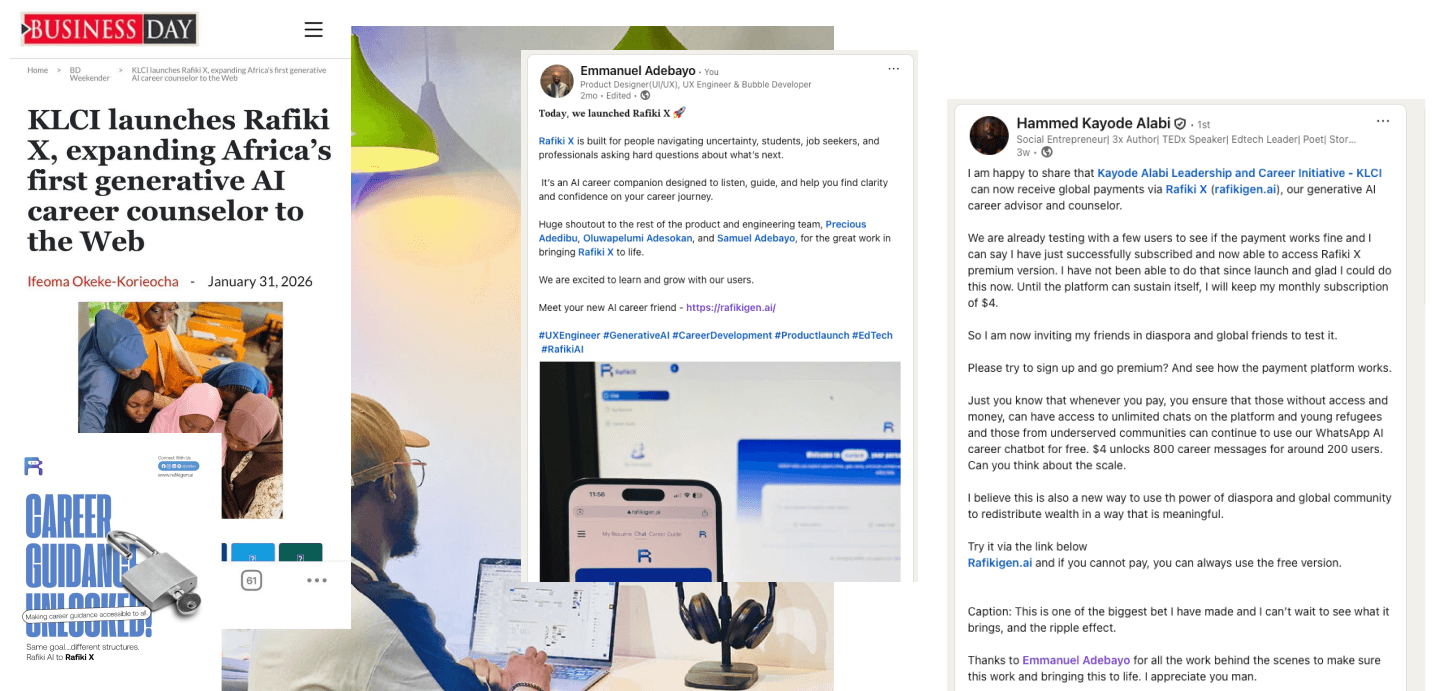
On February 10, 2024, Rafiki AI was launched by the Kayode Alabi Leadership and Career Initiative (KLCI) as an experiment — an AI-powered career advisor designed for underserved and displaced young people.

The response was immediate.
In a few months, it grew to over 9,300 users, with more than 83,000 conversations and nearly 40,000 career-related questions asked. People weren’t just using it, they were relying on it.

But something became clear.

Users didn’t just want answers.

 They wanted context, personalization, and continuity.
That’s where Rafiki X began.

On February 10, 2024, Rafiki AI was launched by the Kayode Alabi Leadership and Career Initiative (KLCI) as an experiment — an AI-powered career advisor designed for underserved and displaced young people.

The response was immediate.
In a few months, it grew to over 9,300 users, with more than 83,000 conversations and nearly 40,000 career-related questions asked. People weren’t just using it, they were relying on it.

But something became clear.

Users didn’t just want answers.

 They wanted context, personalization, and continuity.
That’s where Rafiki X began.

ROLE

Product Designer

Product Designer

Product Designer

OVERVIEW

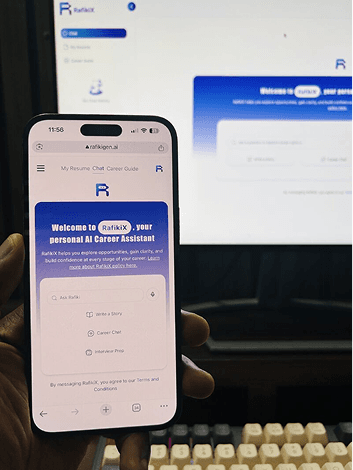
Rafiki X is an AI-powered career guidance platform designed to support students, job seekers, and professionals navigating uncertainty. It builds on the success of Rafiki AI, extending its capabilities into a more interactive, document-driven, and personalized web experience.

Rafiki X is an AI-powered career guidance platform designed to support students, job seekers, and professionals navigating uncertainty. It builds on the success of Rafiki AI, extending its capabilities into a more interactive, document-driven, and personalized web experience.

MY ROLE

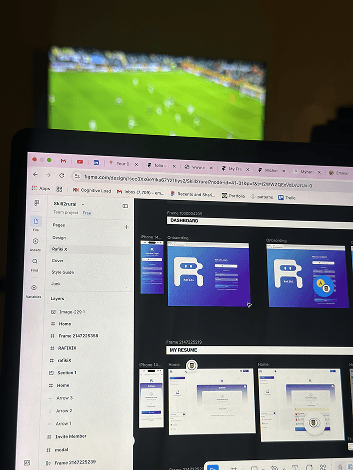
I worked as a Product Designer, leading the product from idea to execution.

That meant:

  • Designing the full user experience from scratch

  • Structuring how users interact with AI in a meaningful way

  • Defining the logic behind how data, documents, and conversations connect

I worked as a Product Designer, leading the product from idea to execution.

That meant:

  • Designing the full user experience from scratch

  • Structuring how users interact with AI in a meaningful way

  • Defining the logic behind how data, documents, and conversations connect

THE CHALLENGES

Career guidance is often:

  • Generic and not personalized

  • Expensive or inaccessible

  • Not available at the moment users actually need it

For underserved and early-career users, this creates a gap between ambition and direction.

Career guidance is often:

  • Generic and not personalized

  • Expensive or inaccessible

  • Not available at the moment users actually need it

For underserved and early-career users, this creates a gap between ambition and direction.

THE SOLUTIONS

Career guidance today is either:

  • Too generic

  • Too expensive

  • Or not available when people actually need it

For many users, especially in emerging markets, this creates a gap between having potential and knowing what to do with it.
I wanted to design something that didn’t just give advice, but helped users think through their decisions.

Career guidance today is either:

  • Too generic

  • Too expensive

  • Or not available when people actually need it

For many users, especially in emerging markets, this creates a gap between having potential and knowing what to do with it.
I wanted to design something that didn’t just give advice, but helped users think through their decisions.

DESIGN APPROACH

1. Making AI Context-Aware
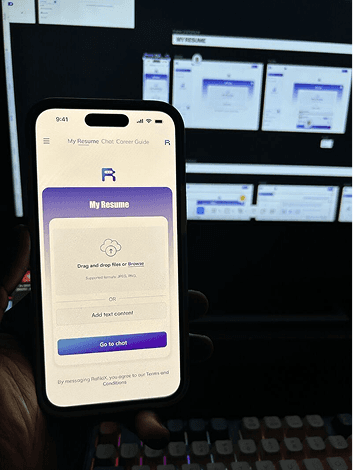
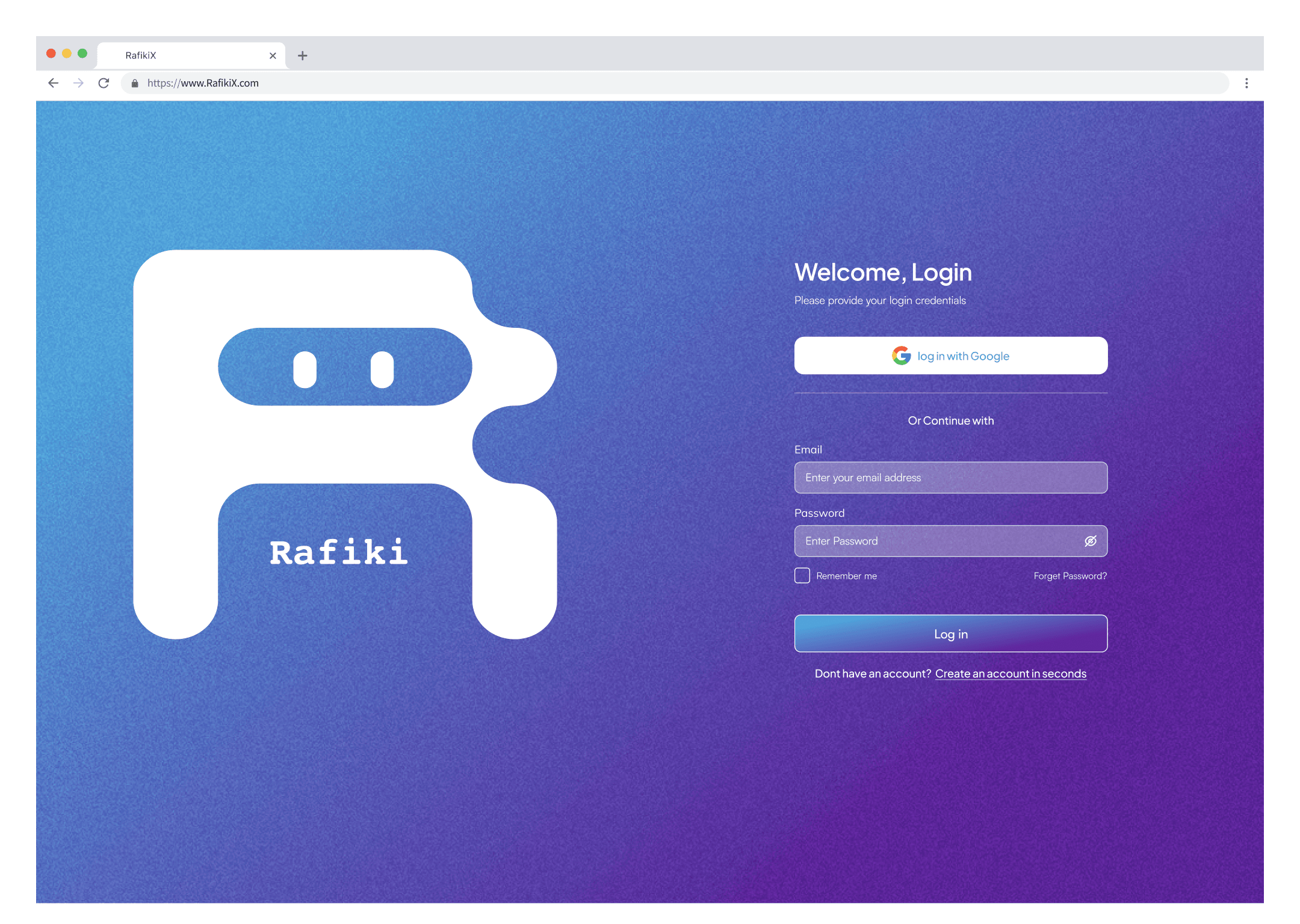
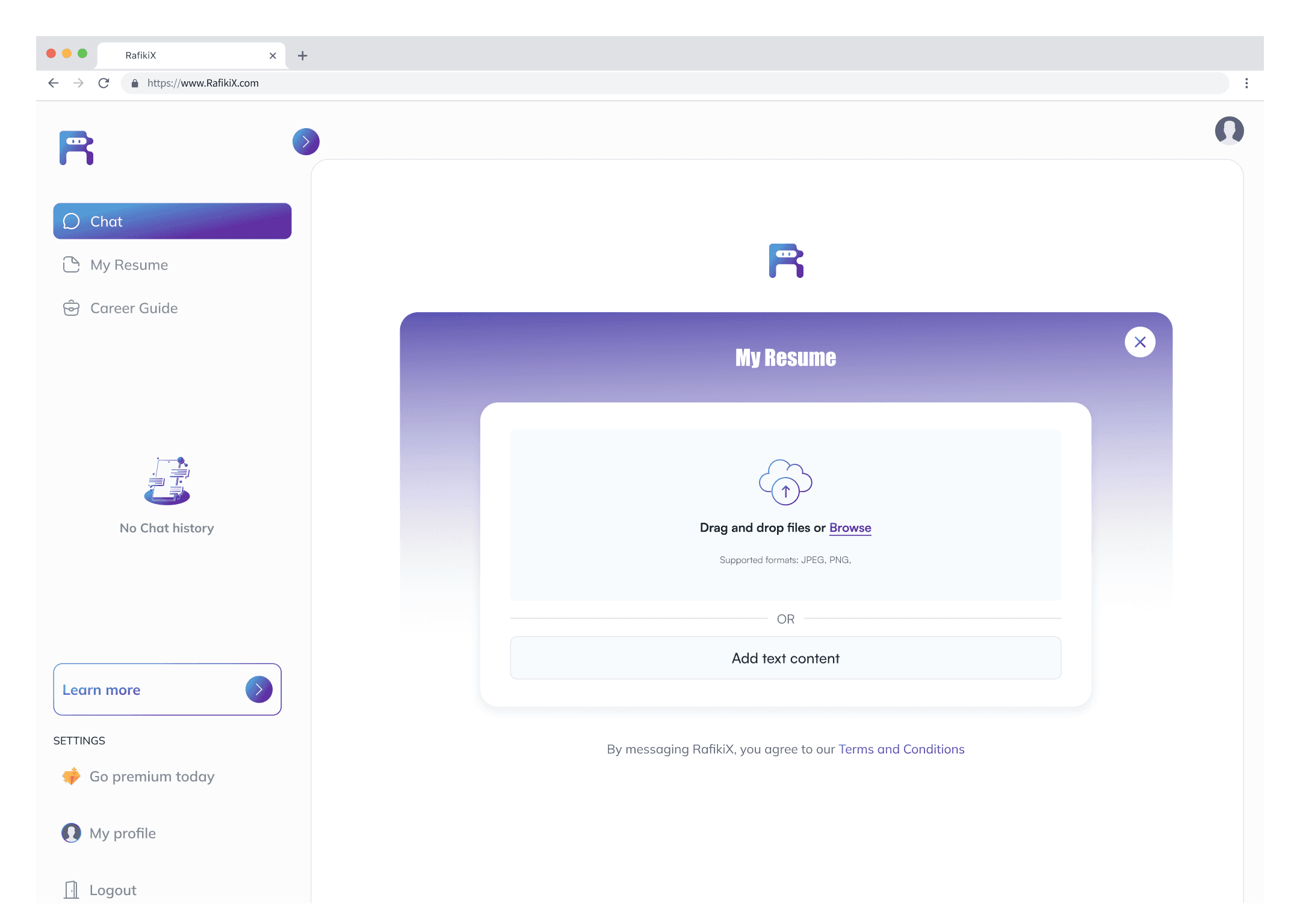
I introduced CV uploads as a core part of the experience.
Instead of starting from zero, Rafiki X understands who the user is, their background, and what they’re trying to achieve. This made every interaction more relevant and actionable.
2. Designing for Conversation, Not Commands
Rather than building a complex dashboard, I focused on a chat-first experience.
The goal was to create a space where users could:

  • Reflect

  • Ask questions

  • Explore options

Not just receive instructions.
3. Reducing Friction with Voice
Many users are more comfortable speaking than typing.
By integrating voice-to-text, I made it easier for users to express themselves naturally, especially in moments where they’re unsure or overwhelmed.
4. Supporting Real Career Actions
Beyond guidance, users needed help taking action.
So we introduced:

  • Career story generation for applications

  • Interview preparation support

  • Document-based feedback

This shifted Rafiki X from being just a guide to being a practical career tool.
5. Rethinking Monetization
Instead of a traditional paywall, we designed a support-based subscription model.
The idea was simple:

 Keep the platform accessible, but allow users who can afford it to support its sustainability.
This was especially important given our focus on underserved users.
DESIGN CHALLENGES

Balancing AI capability with usability
Ensuring responses felt human and relevant
Handling document parsing and context injection
Designing for users who may not be tech-savvy

IMPACT & OUTCOMES

Rafiki X builds on a strong foundation:

  • 9,300+ users

  • 83,000+ conversations

  • 40,000+ career questions answered

  • Users across 60+ countries

More importantly, it’s being used in real contexts — including schools where teachers use Rafiki as a co-counsellor.

WHAT I LEARNED

AI is only as useful as the context you give it
Simplicity is critical, especially for first-time users
Career decisions are emotional, not just logical
Good design doesn’t just inform, it supports thinking

CLOSING STATEMENT

Rafiki X is not just about building an AI product.
It’s about rethinking how career guidance works —

 making it more accessible, more personal, and more human.
My Arsenal

My Arsenal

My Arsenal

My Arsenal

My Arsenal

My Arsenal

My Arsenal

My Arsenal

Create a free website with Framer, the website builder loved by startups, designers and agencies.